 11
11
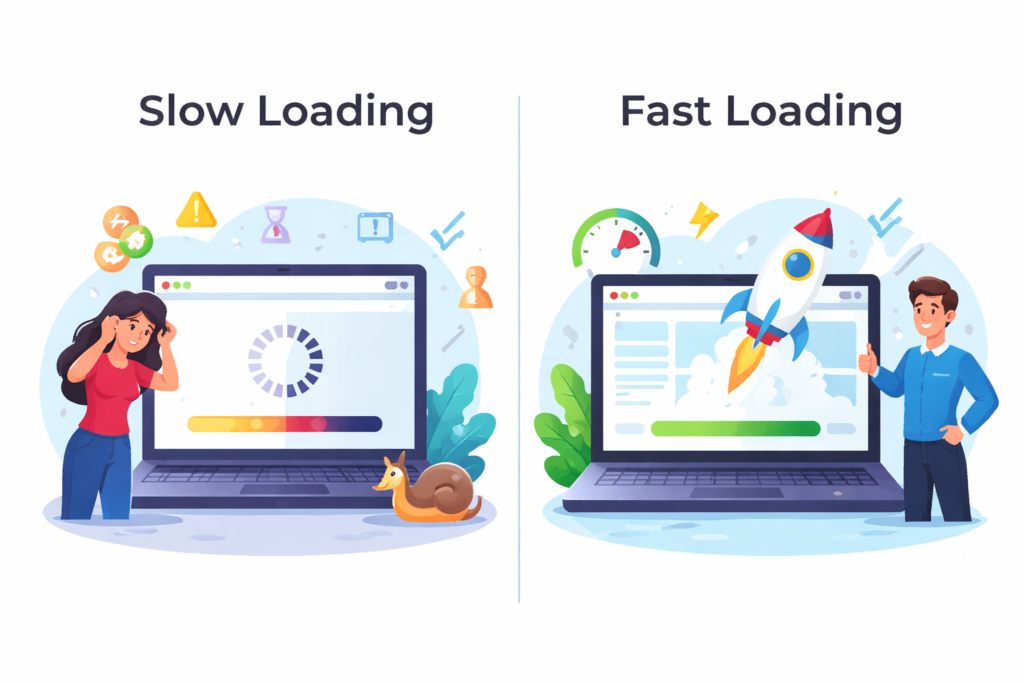
Speed is essential for your website to function properly. Your visitors are expecting to see a new page in milliseconds.
If it doesn’t load fast enough, they will leave your website and probably never return again, which can negatively impact your business. Search engines such as Google also take speed into consideration when determining how well to rank websites, which may affect your overall visibility if your website loads slowly.
The good thing about improving your website load speed is that you do not need to be a master of technology to do so. You can implement many simple changes quickly that can have a major influence on speeding up your website’s load time.
This article offers practical tips for improving your website speed that are easy to understand, and will help beginner webmasters be more successful in 2026.
Before discussing how to improve your website’s speed, it will help to know why improving your website speed is important to you. Studies demonstrate that customers expect a website to load in fewer than three seconds.
The likelihood of them leaving after waiting longer than three seconds increases dramatically after three seconds pass. One of the negative consequences of a slow loading website is the inability of an e-commerce store to generate revenue, while a slow loading blog will keep readers engaged.
Google is one example of a search engine that ranks websites based on page load speeds. As it relates to the overall page load time of a website,
Google evaluates the Core Web Vitals criteria which include measuring the time it takes for the primary content to appear on a website, and how stable the page remains while loading; sites with faster page load times tend to rank higher on search engine results pages increasing traffic without necessitating paid advertisements.
In addition to being important factors for Google to rank websites, fast loading sites provide an individual user with a positive overall impression.
An individual user wants to find what they need quickly when they are visiting a website.
If the page loads fast then they will feel they have visited a high quality and trustworthy website. If the page does not load quickly, the user will feel they have visited a low quality and untrustworthy website.Speed is among the best investments you can make to guarantee your website succeeds.
You must first have a baseline speed for your site before you can affect your site’s speed or performance. There are a number of tools available to help you test your speeds so you know exactly what needs attention.
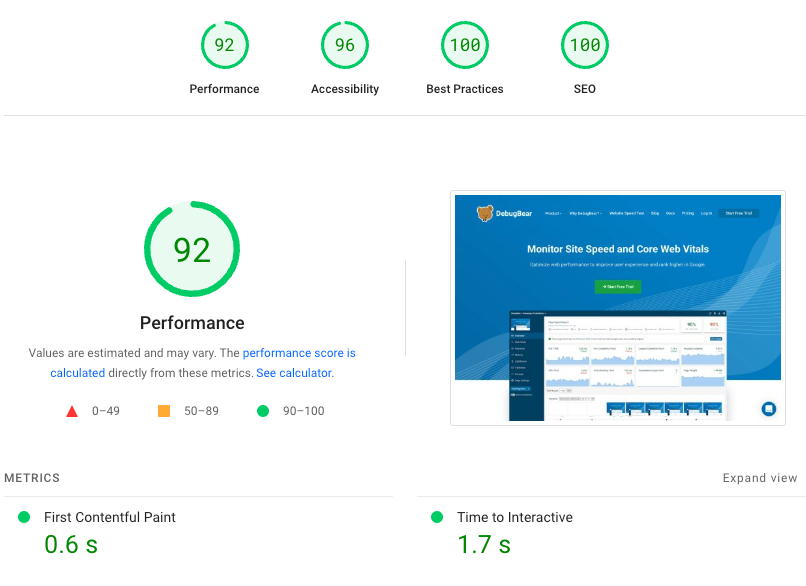
Google Page Speed Insights is a free Google tool that will measure your page speed and provide a score from 0-100. In addition to telling you your page’s speed score, Google Page Speed Insights will provide you with suggestions on what you can do to increase your page speed and performance. Just type in your web address for the URL and click on Analyze.
Once the tool runs and gives you back your numbers, look at the Core Web Vitals for the actual number that your page received compared with other sites.
Look through the Opportunities for speed improvement where you’ll see what you can do to increase your page speed based on the priority estimate of results.
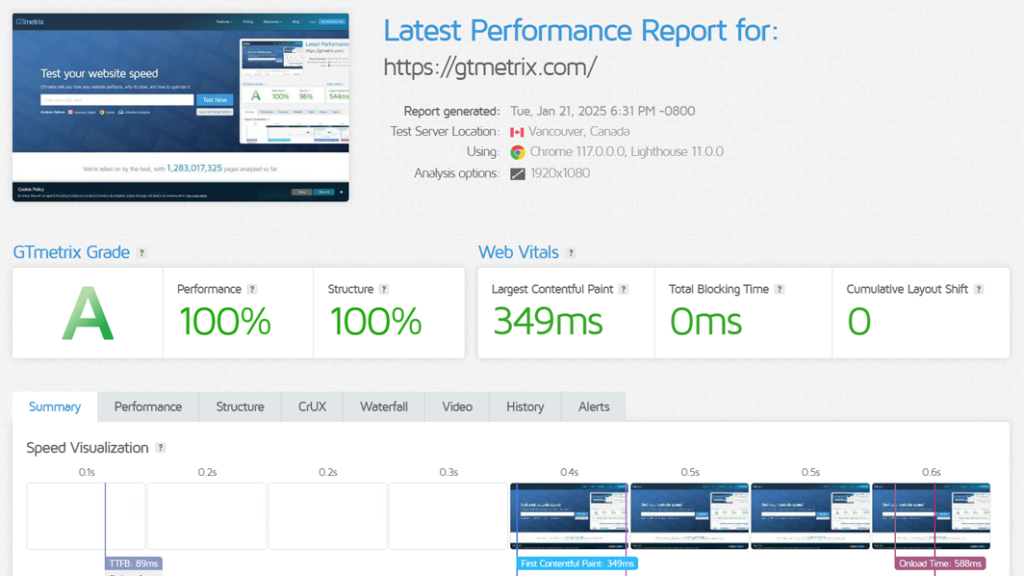
GTmetrix uses Google Lighthouse information and adds their own insights about your site.
GTmetrix creates a waterfall chart that hierarchically organizes all files that have been loaded to your site and displays where the time delays are. GTmetrix provides a free version will work well for most novice website owners.
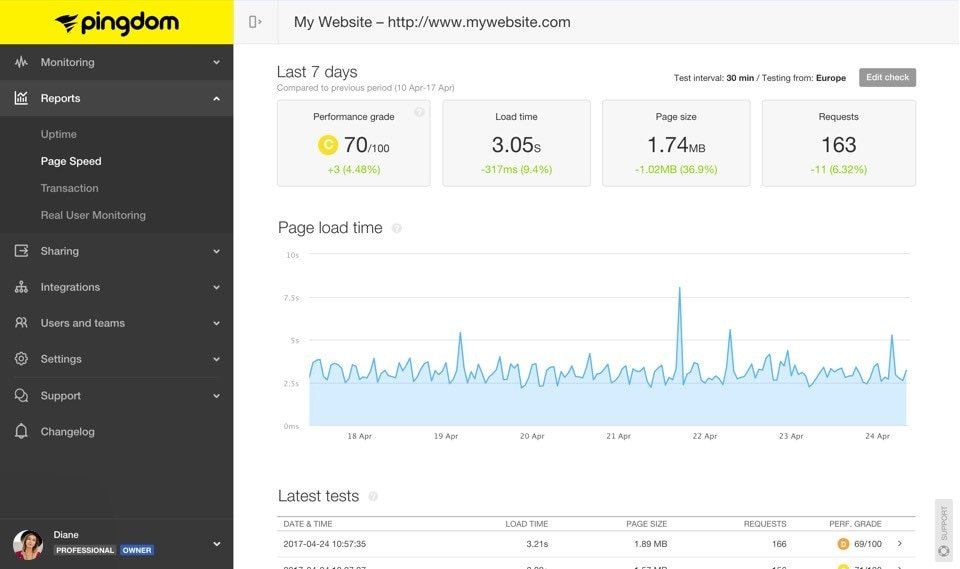
Pingdom is another simple and effective performance measuring tool. Pingdom is an excellent tool for testing overall load times and has different locations to test from.
Their free testing and performance information are very clear and simple to understand.
You should test your website through the three available tools to get a complete picture of your website speed and performance.
Make a list of the metrics you’ve developed while recording your scores for each of the various diagnostic tools. The next step is to examine those metrics to identify the service changes you should focus on first.
Images are generally one of the largest files that are loaded onto a webpage and can be one of the major reasons that a website loads slowly. With that being said, optimizing images is an effective way to speed up websites.
If you’re posting pictures or complicated images, your best bet is to go with the JPEG file. For logos or other graphics/documents with simple colours, PNG files are best suited.
If you have an image that has transparency, you best bet will be either to use either the PNG file.
There are also new formats such as WebP which offer even better compression, however WebP is still not supported by all browsers, so you may want to try using an image converter to convert your images to WebP automatically.
Do not upload a 4000 pixel image to your website and expect the browser to resize the picture for you. Always have your images pre-sized to the maximum size that they will be displayed.
For example, if you blog area is only 800 pixels, do not upload an image that is larger than this size. Most image editing programs, as well as most website builders will include a resizing option for that file.
When a file is compressed the physical size of a file is smaller; however, there should not be any visible signs of compression. Use a number of free tools, such as TinyPNG and Compressor.io to greatly reduce the file size of the images on your website before uploading.
You would simply upload the images you wish to compress to these services, allow them back to the servers, then download the smaller files.
In addition to using third-party compression tools, many content-management systems now have plug-ins that will automatically compress your images as they are being uploaded to your website.
Beyond images, there are server-level settings that can dramatically improve load times by reducing file sizes and minimizing repeated work.
GZIP compression is a setting on your web server that compresses your website’s files (like HTML, CSS, and JavaScript) before sending them to the browser.
This can reduce the size of these files by up to 70%. Most quality hosting providers have this enabled by default, but you can check by using online GZIP testers.
If it’s not enabled, your host can usually turn it on for you, or you can enable it yourself by adding a simple code snippet to your .htaccess file.
When a user visits your site for the first time, their browser downloads all the files. Browser caching allows you to tell the browser to store certain files locally for a specific amount of time.
This means that when a user visits a second page or returns the next day, their browser doesn’t have to download the same files all over again.
You can set up browser caching by editing your .htaccess file or by using a caching plugin if you are on a platform like WordPress.
With a CDN, copies of your images will be stored on multiple servers across the globe (content delivery network). This means that when a potential customer visits your site, they will receive the image from the server closest to them, which is much faster.
A website’s speed depends a lot on the hosting company’s quality. A low-cost (or overcrowded) server will always have some slowdowns even if you do everything possible to optimize.
Look for SSD’s (solid-state drives) as they load data roughly 20 times faster than standard hard drives. You will also want a provider that offers additional speed-related services such as CDNs and server-level caching.
It’s a good idea to read reviews of your potential hosting providers to see if they are known for having great uptime and fast speeds.
Stay away from any hosting plan that has an “unlimited” hosting plan because of how crowded those types of servers likely will be.
For many beginners, it may actually be worth your while to invest in managed hosting. A managed hosting company can manage most of the technical optimization, security, and updates for you, making it easier for you to concentrate on creating content.
Many hosting companies specialize in platforms, such as WordPress, with fully integrated CDNs and caching.
If you’re currently using a basic shared hosting plan and your site has grown beyond that, upgrading your hosting plan to a higher-level plan or VPS (virtual private server) is very likely to significantly improve your website’s loading speed.
To find out what options are available for upgrading your current hosting plan, please contact your current host.
A CDN is an interconnected network of servers storing copies of your site’s files from multiple locations geographically.
When someone accesses your site, the file will be loaded from the closest server to the user so there is less distance for the file to travel before it is served to the visitor resulting in quicker loading of your website.
Cloudflare offers CDN services at no charge through their free plan. Cloudflare also provides many security-related features and caching enabling an easy setup takes about five minutes to implement by changing the nameservers on your domain.
After you configure Cloudflare, everything else will be handled by Cloudflare without any more effort on your part.
Redirection sometimes creates an unnecessary cost on your web hosting account.
Another benefit of using a CDN is that it will act as a buffer for Distributed Denial of Service (DDoS) attacks, meaning your site’s traffic can be balanced between many locations around the world.
In addition to being fast, maintaining CDN functionality will save you from costly data charges, and if you have visitors from other countries, you might notice a substantial increase in the speed at which your site will be presented to them.
As your website grows, if you have chosen to use a Content Management System (CMS) such as WordPress, your database will become increasingly inefficient over time.
Your WordPress database can become bloated with many types of unnecessary entries:
There are numerous plugins that can help with de-cluttering your database. By using WP-Optimize or other plugins, you can easily remove unused revisions, delete spam comments, and optimize the structure of your database and database tables. Clean your database out once each month to keep it lean.
Whenever you post an update in WordPress, it continually saves additional posts as revisions.
You can limit the number of revisions stored by adding a simple line of code to your wp-config.php file: define('WP_POST_REVISIONS', 5); This tells WordPress to only keep the last 5 revisions of each post instead of an unlimited number.
As you keep adding content and features to your website, its overall performance generally slows down. That’s why monitoring the performance of your site is so important, so that you catch any problems early.
You should perform periodic speed tests on your website using different speed testing services (like Google’s Page Speed Insights) each month to measure your webpages’ performance.
When you experience a drop in your scoring, you need to look for what might have changed on your site that may have contributed to the slower speed.
Two of the most common things that contribute to the loss of speed are new plugins and adding images that are too large to your site or changing themes.
There are services that will provide uptime monitoring; they will notify you of any issues or downtime that may be temporarily impacting your website or if the performance has slowed down compared to normal.
This type of information allows you to resolve any issues before they have a chance to impact a large number of visitors to your website.
Many newbies have spent countless hours developing a perfect website score. A two-second load time is the proper standard, even if it’s not a perfect score according to all the various types of testing tools you may have run against your site. As long as your customers can successfully use your website, that’s your primary focus.
Many new website owners focus solely on desktop computers. Today, the majority of website traffic is generated via mobile users. When performing speed testing and optimization, always do so upon mobile devices first.
Each plugin you utilize provides an opportunity to slow down your website. Therefore, install only those plugins that you are absolutely sure of needing; remove all the plugins you don’t need.
In most cases, speed will decrease without any advanced warning after changes are made to your site. Always use speed tests after making any changes to see if the changes you made helped your speed performance.
With regard to the above topics, it’s relatively simple for users who are new to web design and optimization to start improving your website’s speed.
An excellent starting point to find your website’s speed is to use tools, such as Google’s Page Speed Insights.
When doing so, be sure to focus on the area of greatest impact such as optimizing images, enabling gzip compression, and caching.
Your website’s page loading speed will also improve by using an excellent hosting company and utilizing an inexpensive content delivery network (CDN), such as Cloudflare. In addition, limit the number of installed plugins to avoid excessive bloat and clean up your database regularly.
Finishing with optimizing for speed should remain a continuous process and not just a onetime event. Check the speed of your website each month to find out if there are any new problems that you need to resolve.
By making a point of continuing to work on speed optimization, you make it possible to maintain the speed of your web page, keeping your customers happy and contributing positively to your search engine rankings.